Service Businesses Recording Customer Calls: Ethics Beyond Compliance

A homeowner in Texas calls a roofing company about a leak. She describes the damage, mentions her insurance situation, talks about her budget constraints, and asks for a rough estimate. She does not know the call is being recorded. Texas is a one-party consent state, so the roofing company only needs its own consent to record. The recording gets stored in their CRM, transcribed by AI, analyzed for keywords, and tagged with notes about the customer's budget and insurance status. When the sales rep shows up for the estimate, he already knows exactly how much she can afford and which emotional buttons to push.
Everything in this scenario is legal. None of it is ethical.
The One-Party Consent Loophole
According to the state-by-state breakdown from Justia, thirty-eight states plus the District of Columbia allow call recording with one-party consent, meaning only one person on the call needs to know it is being recorded. In practice, this means the business records every call and the customer never finds out. The twelve two-party consent states (including California, Florida, and Illinois) require all parties to be informed, which is why you hear "this call may be recorded for quality assurance" when calling businesses in those states.
Most service businesses operate in one-party states and never disclose their recording. They are not trying to be sneaky. Their phone system or CRM just has recording enabled by default, and nobody thought about whether customers should know. ServiceTitan, Housecall Pro, and many VoIP providers like RingCentral and Dialpad include call recording as a standard feature. The setup wizard asks "would you like to enable call recording?" and the business owner clicks yes because more data sounds better than less data.
But "we can legally do this" and "customers would be comfortable if they knew" are very different standards. The gap between them is where the ethical problem lives.
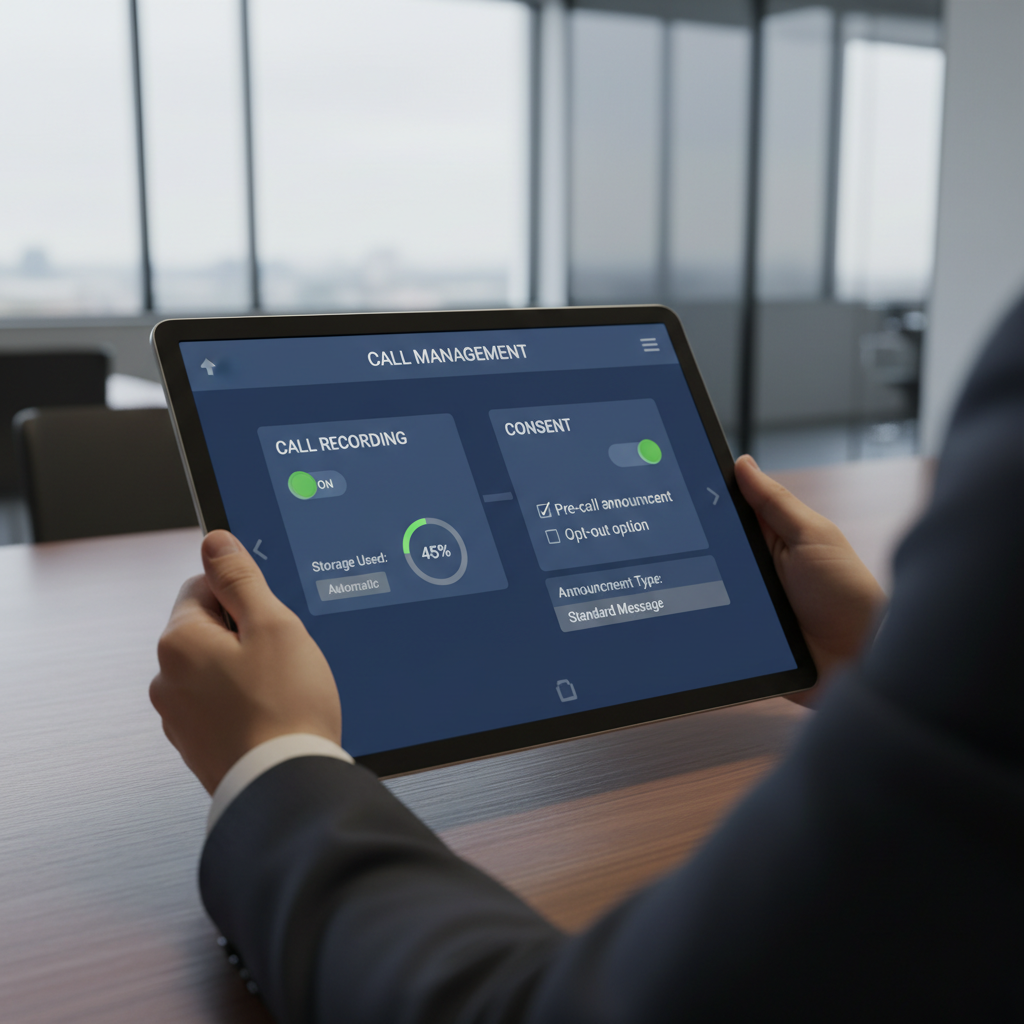
What Actually Happens With the Recordings
Call recording was originally sold as a quality assurance tool. Listen to calls, identify training opportunities, resolve disputes about what was promised. These are legitimate uses and they remain the primary justification businesses give for recording.
But the technology has evolved far past simple playback. Modern platforms automatically transcribe calls using AI, then analyze those transcriptions for sentiment, keywords, and sales indicators. Some systems score leads based on what the customer said in the call, flagging phrases like "ready to move forward" or "comparing quotes" to prioritize follow-up.
ServiceTitan's call tracking feature, for example, ties recordings to customer profiles and uses them to assess lead quality. CallRail, a popular tracking platform for service businesses, offers AI-powered conversation intelligence that extracts "key moments" from calls and categorizes them automatically.
The customer who called about a roof leak did not consent to having her financial situation analyzed by an algorithm. She was having what she thought was a private conversation with a contractor. The fact that the contractor's software was mining that conversation for sales intelligence would change how most customers communicate if they knew about it.
The Informed Consent Standard
There is a meaningful difference between technical legal compliance and informed consent. Legal compliance in a one-party state means the business can record without telling anyone. Informed consent means the customer knows the call is recorded, understands how the recording will be used, and chooses to proceed.
The "quality assurance" disclosure that two-party consent states require is itself misleading in many cases. When a business says "this call may be recorded for quality assurance," the customer reasonably assumes someone might listen to the call to evaluate the receptionist's performance. They do not assume the call will be transcribed, analyzed by AI, and used to build a sales profile that follows them through the entire customer relationship.
This gap between what customers expect and what actually happens is exactly the kind of consent theater that erodes trust across the service industry. The disclosure technically exists but communicates almost nothing about the actual data practices.
The Power Asymmetry Problem
When a customer calls a service business, there is already a knowledge imbalance. The business knows its pricing, its capacity, its profit margins, and its sales tactics. The customer knows they have a problem and they want it fixed. Recording and analyzing the call amplifies this asymmetry dramatically.
A customer who mentions in passing that their insurance will cover the repair has given the business a signal to quote higher. A customer who expresses urgency ("I need this done before Thanksgiving") has revealed their deadline, which can be leveraged for premium pricing. A customer who mentions getting multiple quotes has told the business to adjust its sales approach.
None of this intelligence gathering would be possible in a face-to-face conversation, because the customer would see the contractor writing notes about their personal statements. On the phone, it is invisible. The recording captures everything, and the software extracts the commercially useful parts automatically.
This is not how honest business relationships work. In an honest relationship, both parties have a shared understanding of what information is being collected and how it will be used. When one side is secretly recording and analyzing the other, the relationship is fundamentally unequal in a way the disadvantaged party did not agree to.
What Ethical Call Recording Looks Like
If you are going to record customer calls, and there are legitimate reasons to do so, here is how to do it without compromising your integrity:
Disclose to every caller, regardless of state law. "This call may be recorded" should be standard even in one-party consent states. The legal minimum is not the ethical standard. If your phone system supports an automated greeting, add the disclosure. If it does not, train your team to mention it at the start of every call.
Be specific about use. "For quality and training purposes" is vague to the point of meaninglessness. If you are using AI transcription and analysis, say so. "This call may be recorded and analyzed using AI tools to improve our service" is more honest and only marginally longer.
Limit data extraction to operational uses. Using call recordings to resolve disputes, train staff, and improve service quality is defensible. Using them to build sales profiles and optimize pricing based on customer vulnerability signals is not. Draw a clear line between operational intelligence and sales intelligence, and keep recordings on the operational side.
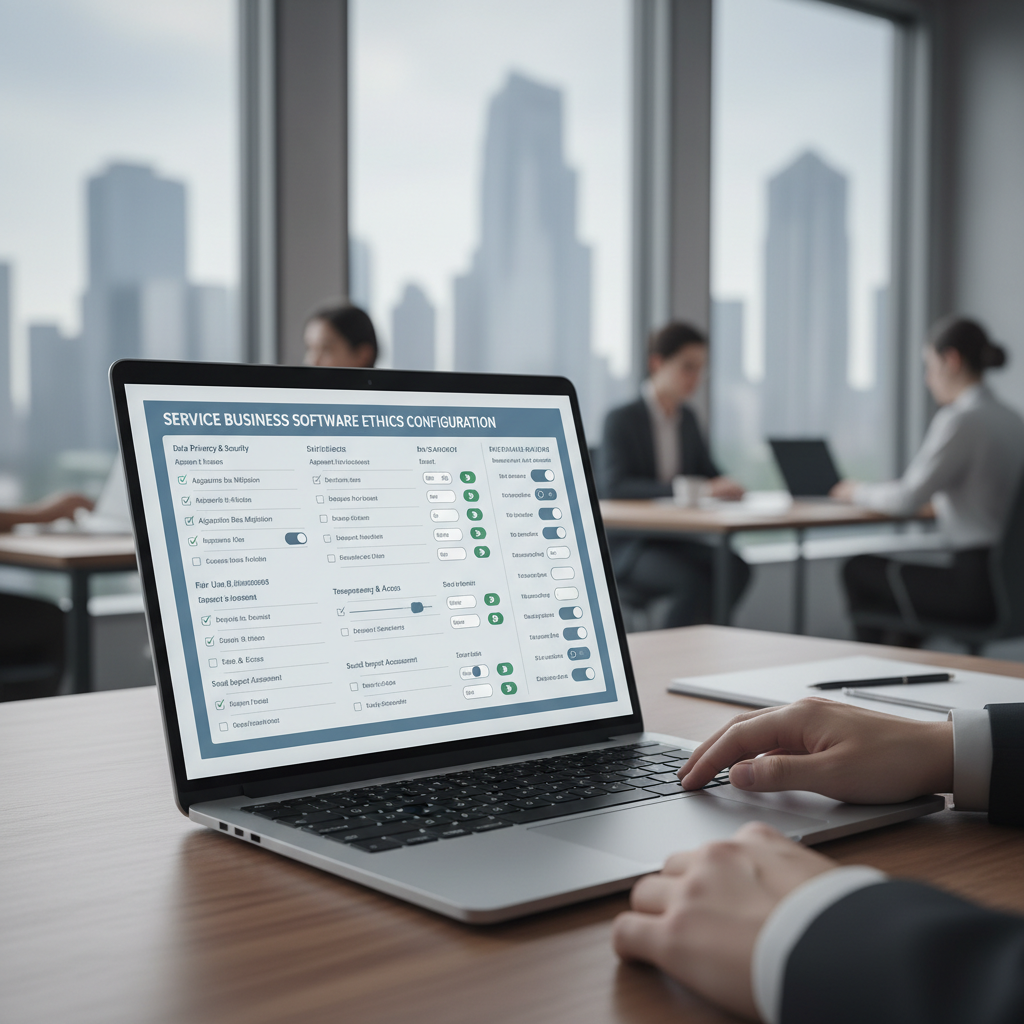
Set retention policies and follow them. Many businesses record calls and keep them indefinitely because storage is cheap. But indefinite retention of customer conversations creates unnecessary risk and raises questions about purpose. If you are recording for quality assurance, you do not need recordings from three years ago. Set a retention period, automate deletion, and document the policy.
Give customers access. If a customer asks for a copy of their recorded call, provide it. This is already required under some privacy laws (CCPA in California, for example), but doing it proactively demonstrates confidence in your practices. If you are uncomfortable with a customer hearing their own recorded call with your business, that discomfort is diagnostic.
The Competitive Reality
Some business owners will argue that ethical call recording puts them at a disadvantage against competitors who record, analyze, and exploit without disclosure. This is the same argument used against every ethical business practice, and it is wrong for the same reason: the businesses that build genuine trust with customers outperform those that extract short-term advantage through information asymmetry.
A customer who finds out that a business recorded and analyzed their call without disclosure will not just leave a bad review. They will tell everyone they know. In the local service industry, where word-of-mouth drives a significant portion of new business, that kind of story spreads faster and causes more damage than any review management software can contain.
Record calls if you need to. But tell people you are doing it. Explain why. Limit what you do with the recordings. And treat the customer's words as their property, not your competitive intelligence. The bar here is not high. It is just higher than "whatever we can legally get away with."