Customer Trust in the Age of Automated Everything
Trust is not a feature you can add to a product. It's not a badge you display on your website or a five-star rating you accumulate on Google. Trust is what happens when a customer hands over their credit card, their car keys, or access to their home and believes, based on evidence, that the business will treat them fairly. That belief used to be built entirely through human interaction. Now software mediates most of it, and the software has its own agenda.
Consider what happens when a customer books an appointment with a plumbing company. Before they ever meet a technician, software has shaped their experience in a dozen ways. The booking form decided what information to collect and what to pre-select. The confirmation message set expectations about pricing, or carefully avoided setting them. The reminder sequence built a sense of commitment. The intake process may have run their address through a database to estimate their home value and adjust the service pitch accordingly. None of this is visible to the customer. All of it affects what happens next.

This review request only appears if the customer gives a high internal rating first. Positive reviews by design.
The problem isn't that businesses use software. The problem is that the software often optimizes for outcomes the customer wouldn't endorse if they understood the mechanism. Review gating is the obvious example: filtering who gets asked for a public review based on whether they rated the service positively in a private survey. The result is a public reputation that reflects only the best experiences. The customer browsing those reviews has no idea they're seeing a curated highlight reel. They think they're seeing reality.
Consent as performance
The service industry has gotten very good at collecting consent without ever obtaining it. Cookie banners, terms of service, privacy notices, data collection disclosures. They exist. Customers click through them. Nobody reads them. And that's the point. The legal boxes get checked while the actual understanding remains close to zero.
This is what we call consent theater: the performance of asking permission in a way specifically designed to avoid informed decision-making. A wall of legal text is not transparency. A pre-checked checkbox is not agreement. A "by continuing to use this site" banner is not consent. These mechanisms exist to protect the business legally, not to serve the customer ethically. The distinction matters, because when something goes wrong, the business will point to the consent and the customer will point to the reality that nobody ever explained anything in plain language.
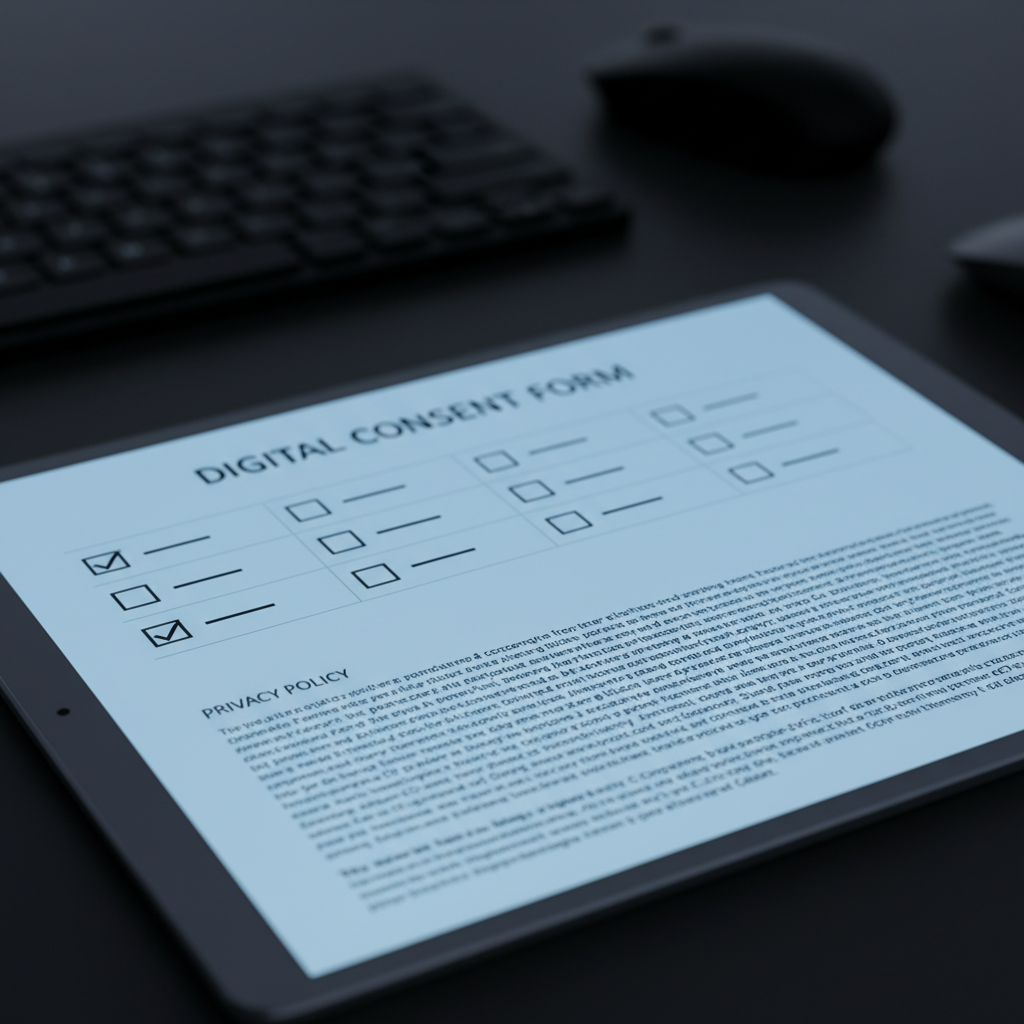
A consent form designed to get signatures, not informed agreement.
The compounding problem
Individual trust violations are small. A slightly misleading review profile here, an undisclosed AI interaction there, a pre-checked upsell box on a booking form. Each one is easy to rationalize. Customers don't notice. Revenue goes up. Nobody complains. The vendor keeps shipping features that work the same way because the metrics all point in the right direction.
But trust erodes in compound. Each small violation makes the next one easier to justify and harder for the customer to detect. The business that starts with review gating eventually adds AI-generated follow-ups that impersonate a real advisor. The shop that uses pre-checked add-ons on booking eventually implements dynamic pricing based on customer data. None of these transitions happen in a single dramatic moment. They happen gradually, feature by feature, default by default, until the customer-facing experience is substantially dishonest and nobody involved can point to when it became that way.
The articles in this section examine specific trust patterns in service business software. Some focus on techniques that are already widespread. Others look at emerging practices that most businesses haven't adopted yet but will be pressured to. All of them share a common thread: the customer deserves to make decisions based on real information, and software that prevents that is a problem regardless of how good the business metrics look.

The transparency gap: what the business sees versus what the customer sees. They're not looking at the same reality.