Service Operations: Where Software Meets the Customer
The ethics conversation about business software tends to focus on the big, visible things: AI, dark patterns, data privacy. But most of the ethical action in service businesses happens at the operational level. It happens in the scheduling flow, in the inspection process, in the phone call handling, in the way a technician presents findings to a customer. These are the everyday moments where software shapes what the customer experiences, and where the gap between "how the tool works" and "what the customer thinks is happening" tends to be widest.
Take digital vehicle inspections, one of the most significant technology shifts in auto repair over the past decade. The old process: a mechanic looks at the car, writes notes on a paper form, the service advisor interprets those notes and calls the customer. The new process: a technician uses a tablet to photograph findings, the software organizes those findings by severity and estimated cost, and the customer receives a digital report on their phone with color-coded urgency levels and one-tap approval buttons.
On the surface, this is better. More information, more transparency, more customer involvement in the decision. And that's often true. But the software layer between the technician and the customer isn't neutral. It decides how to frame findings. It determines the order in which services appear. It chooses whether to lead with the safety-critical item or the high-margin one. It sets the visual weight of the "approve" button versus the "decline" button. These design choices are operational decisions with direct financial consequences, and they're made by a software vendor who doesn't employ the technician and has never met the customer.
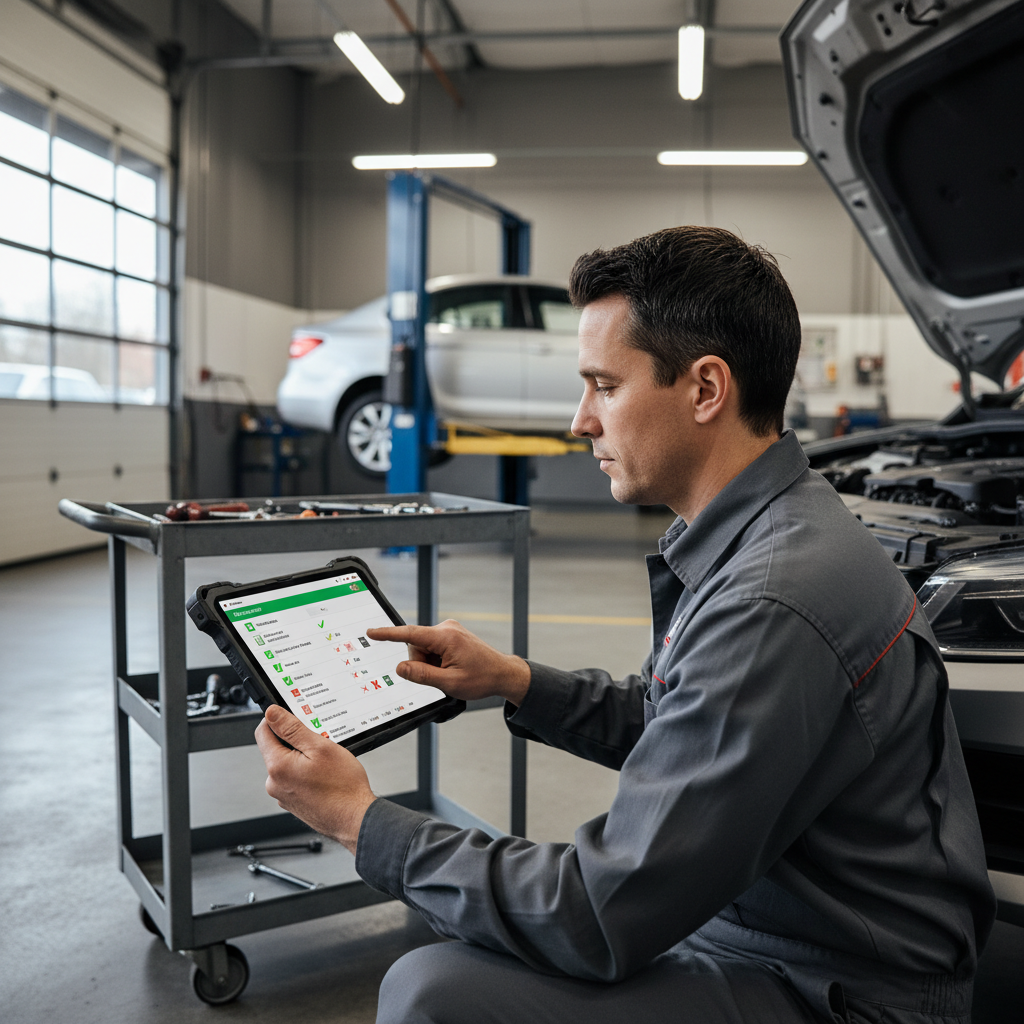
A digital inspection report. The customer sees a transparent breakdown. The software decides what goes first and what gets highlighted.
The phone is still where trust happens
Despite all the automation, the phone call remains the most important customer touchpoint for most service businesses. It's where appointments get made, where concerns get raised, where the tone of the entire relationship gets set. Software has transformed this too. Call recording is nearly universal. Call scoring is common. AI-powered call analysis can evaluate whether the advisor followed the script, used the right keywords, and successfully converted the inquiry into a booking.
The ethical question is what all this monitoring optimizes for. When call recording is used to train advisors on genuine communication skills, it's a legitimate training tool. When it's used to ensure advisors hit upsell targets and follow scripts designed to prevent the customer from price-shopping, the same technology serves a very different purpose. The tool is identical. The intent is what changes. And most businesses never articulate the intent clearly enough to know which one they're doing.
Call recording disclosure is another gap. In many states, one-party consent is the legal standard, meaning the business can record without telling the customer. Legal doesn't mean ethical. A customer who knew the call was being recorded, analyzed for sales effectiveness, and scored on conversion potential would have a different conversation than one who assumed they were just talking to a person. That difference is the ethical question, and most businesses skip it entirely.

Call analytics dashboard. Every conversation scored for conversion effectiveness. The customer is a data point.
Operations as ethics in practice
The reason service operations matter for this conversation is that they're where abstract principles become concrete decisions. It's easy to say "we value transparency." It's harder to build a scheduling flow that shows real pricing upfront when your software vendor's default is to hide it until the appointment is confirmed. It's easy to say "we respect our customers." It's harder to disable the automated follow-up sequence that sends increasingly urgent messages to customers who haven't responded to a service recommendation.
Every operational workflow in a service business is a series of micro-decisions, and software is making more of them than most business owners realize. The articles in this section look at those decisions in specific contexts. How digital inspections can be kept honest. What responsible call recording looks like. Where the line is between operational efficiency and customer pressure. The goal isn't to argue that technology is bad for service operations. It's to argue that technology in service operations deserves the same scrutiny we apply to the flashier topics.

An automated workflow with branching logic. The customer doesn't see the flowchart. They just get the message.