Efficiency vs. Customer Respect: Where Service Software Gets It Wrong
Efficiency is the word service business software vendors use more than any other. Streamline your operations. Automate your workflows. Do more with less. It all sounds like progress, and much of it genuinely is. But there is a version of efficiency that has become standard in the industry that treats customer respect as an acceptable cost to cut.
When a platform automates service recommendations to maximize ticket value, that is efficient. When it sends a cascade of follow-up messages to customers who said no, that is efficient. When it routes phone calls through an AI screening system before a customer can reach a human, that is efficient. In each case, the business saves time or makes more money per interaction. And in each case, the customer's experience of being treated like a person, rather than a revenue opportunity, takes a hit.
The question is not whether efficiency matters. Of course it does. The question is whether the specific efficiencies being sold to service businesses are the right ones, or whether they are optimizing the wrong things at the wrong cost.
Where Efficiency and Respect Align
Before examining where they conflict, it is important to acknowledge that efficiency and customer respect are not inherently opposed. Many of the best improvements in service business technology genuinely serve both.
Digital appointment scheduling saves the customer a phone call and saves the shop time managing the calendar. Automated appointment reminders reduce no-shows, which is good for everyone. Text-based status updates let customers know when their vehicle or project is ready without having to call and wait on hold. Online payment options save time on both sides of the counter.
These are efficiencies that pass the basic test: does the customer benefit from this change, or does only the business benefit? When both sides gain, there is no tension. The problems start when efficiency becomes a euphemism for extracting more from each customer interaction while reducing the business's investment in that interaction.
The Human Interaction Tax
In the efficiency framework that dominates service business software, human interaction is treated as a cost to be minimized. Every minute a service advisor spends talking to a customer is a minute they are not processing the next ticket. Every phone call that could have been a text is an inefficiency. Every conversation where a customer asks questions before approving a repair is friction in the pipeline.
This framing is not always wrong. There are genuinely low-value interactions that can be automated without anyone losing anything. But the category of "low-value interaction" has expanded far beyond where it should be. Some platforms now treat almost any direct human communication with a customer as an inefficiency to be engineered away.
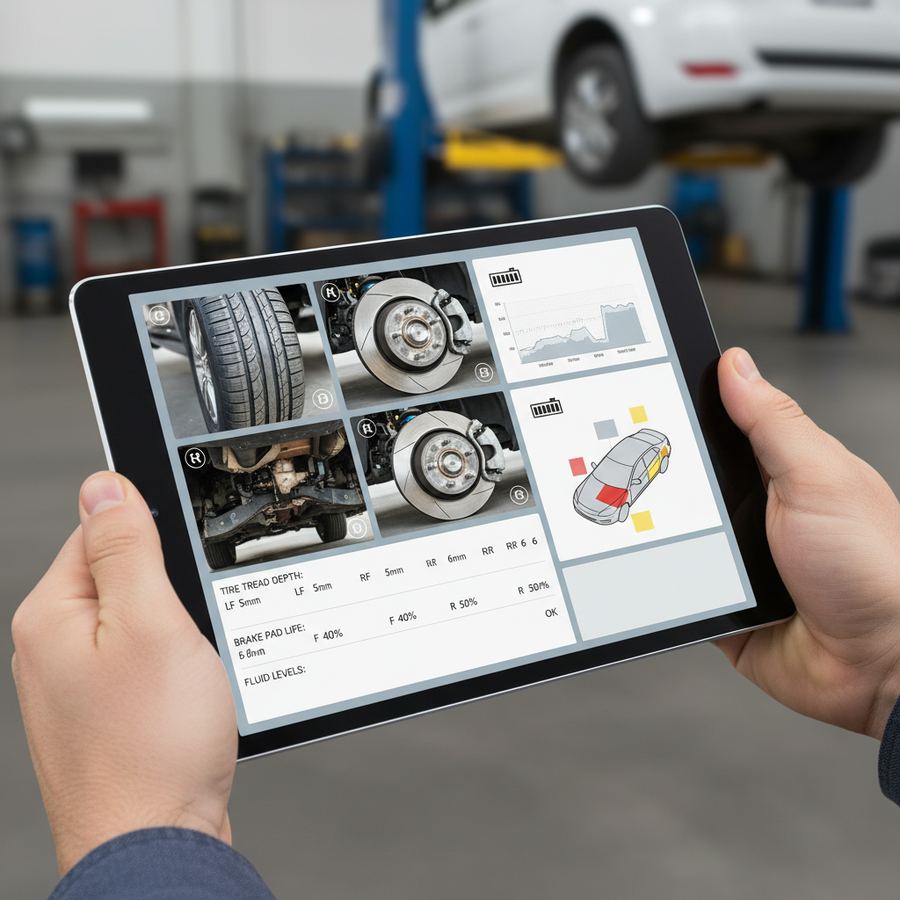
The result is a customer experience where you drop off your car, receive a text with a link to a digital inspection, tap "approve" on a screen, get another text when the car is ready, pay through a link, and pick up your keys from a box. You might go through the entire process without having a real conversation with anyone. Efficient? Absolutely. But also sterile, impersonal, and stripped of the moments where trust gets built.
Trust in service businesses is built through human interaction. It is built when a technician takes two minutes to show you something under the hood. When a service advisor explains why they are recommending one repair but not another. When someone remembers your name and asks about your kid's soccer season. Software cannot replicate these moments, and when it replaces them in the name of efficiency, it is removing the thing that makes customers come back.
Efficiency for Whom?
This is the question that reveals the most about a piece of software. When a tool makes something more efficient, who actually benefits from that efficiency?
Consider automated upsell prompts. A digital inspection tool that automatically generates additional service recommendations based on vehicle age and mileage is efficient. It saves the technician from having to think about what to recommend and ensures nothing gets missed. But "nothing gets missed" from the software's perspective means "everything gets recommended" from the customer's perspective. The efficiency gain goes entirely to the shop in the form of higher average tickets. The customer receives a longer list of recommendations, many of which may not be necessary for their specific vehicle, and has to sort through them without the technical knowledge to evaluate what actually matters.
Or consider call recording and analysis. Some platforms record customer calls and use AI to analyze them for "missed opportunities," meaning moments where the service advisor could have upsold but did not. This is efficient from a revenue-maximization perspective. From the customer's perspective, it means their phone call is being mined for ways to sell them more, and the next time they call, the advisor will be trained to be pushier because a machine said they left money on the table.
The pattern is consistent: the efficiency serves the business's financial goals, and the cost is borne by the customer in the form of more pressure, less genuine interaction, and less respect for their time, attention, and autonomy.
The False Efficiency of Speed
One of the most common efficiency claims in service software is speed. Faster lead response. Faster approvals. Faster turnaround from estimate to signed work order. Speed is treated as universally good, and in many contexts it is. Nobody wants to wait three days for a callback.
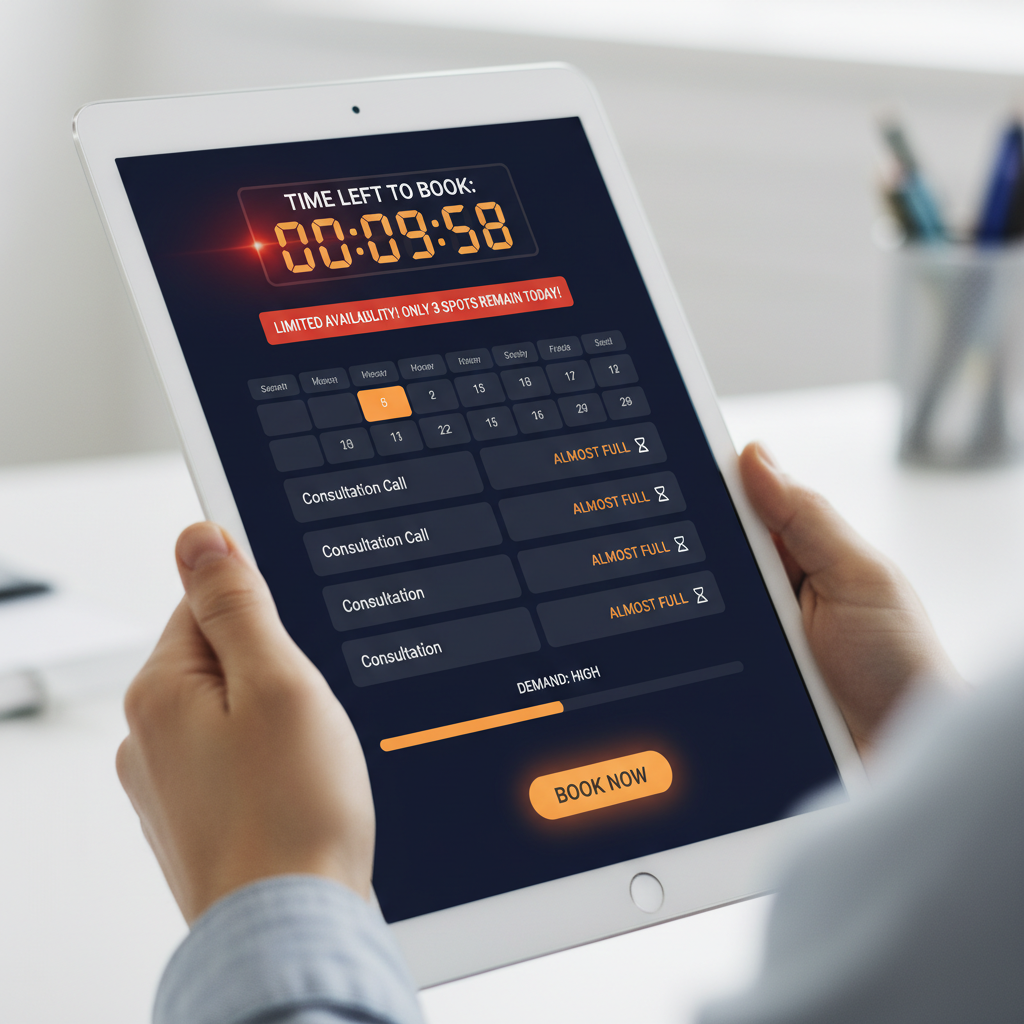
But speed in customer interactions is not always a virtue. When a customer receives a repair estimate and approves it within 30 seconds because the software made it easy and the interface was optimized for quick approval, was that efficient or was it a frictionless experience that did not give them time to think?
When a lead gets an instant automated response that seems personal but is not, and they book an appointment before they have even had a chance to compare options, was that good service or was it a system designed to capture commitment before consideration?
Speed becomes a problem when it is used to reduce the customer's decision-making window. Real efficiency helps the customer get what they need faster. False efficiency helps the business close the deal before the customer has fully engaged their judgment. The difference is subtle in the software interface but significant in the customer relationship.
Building Respectful Efficiency
The goal should not be less efficiency. It should be better efficiency, the kind that respects both the business's need to operate productively and the customer's right to be treated as a thinking person rather than a conversion metric.
What that looks like in practice:
- Automate logistics, not relationships. Use software for scheduling, reminders, status updates, and payment processing. Keep the recommendation and advisory parts of the customer interaction human.
- Measure relationship metrics alongside revenue metrics. Track repeat visit rates, referral rates, and customer satisfaction alongside average ticket value. If the revenue metrics are climbing while the relationship metrics are flat or declining, the efficiency is extractive, not constructive.
- Give customers time and information, not just speed. A fast estimate is good. A fast estimate that includes clear explanations and an easy way to ask questions is better. The extra ten seconds it takes to add context pays back in trust.
- Audit your software from the customer's side. Go through every touchpoint as if you were the customer. Note every moment where the process prioritizes the business's convenience over the customer's experience.
According to a study by PwC on customer experience, 73% of consumers point to experience as an important factor in purchasing decisions, and the primary components of a good experience are speed, convenience, knowledgeable help, and friendly service. Note that three of those four are fundamentally human qualities. Software can support them. It cannot replace them.
The service businesses that will thrive long-term are the ones that use technology to make human interactions better, not fewer. That use efficiency to free up staff time for real conversations, not to eliminate real conversations. That measure success by whether a customer felt respected, not just by whether the software hit its targets.
Efficiency and respect are not enemies. But when software forces you to choose between them, the right answer is almost always respect. The efficient choice makes money today. The respectful choice makes a business that lasts.